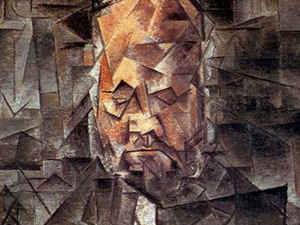
• The Storytelling Brain

    The World “Out There” Is Actually a Creation of the Storytelling Brain

  • Your ZIP Code Could Be Hazardous

    Life expectancy in the U.S. varies by up to 20 years depending on where you’re born. Socioeconomic factors, access to healthcare, and lifestyle choices driven by your environment are key drivers.


  • There Is No Planet B

    Earth is our only home, and human activity is pushing it to the brink. Climate change, resource limits, and unsustainable growth demand urgent action—or risk catastrophic consequences for civilization.

  • The Impact of Digital Technologies

    Digital tools have reshaped every part of modern life—from communication to commerce—but also fueled misinformation, surveillance, and mental health challenges. Understanding and controlling these forces is critical for the future.

  • Paleolithic Beginnings

    From 40,000–35,000 years ago, early humans began conceptualizing a three-tiered universe—spirit world above, underworld below, mortal world in between. Cave rituals, art, and sound were used to engage the spirit world, reflecting early human creativity and trance states. These practices laid the foundation for later religious evolution.

  • Connecting with the Gods

    From Neolithic shamans to Axial Age prophets, human societies have relied on religious structures to maintain order, explain the unknown, and shape culture. These beliefs evolved alongside cities, empires, and civilizations, reflecting both our biological and sociocultural development.

The Human Journey is the story of the human mind, how it developed, the world it made, and the problems it solved. The future depends on what we learn of the past…

Read more


Travel the Journey:

Journey of the Human Mind

We face a world that is far different from our ancestor’s world. But we have the potential to understand and solve the problems of today, many of which are man-made, if we first understand who we are, and how the past has made us.

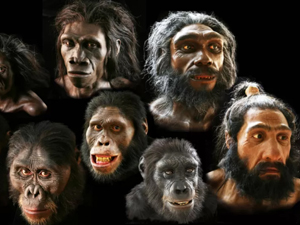
Our Prehistoric Ancestors

Understanding our evolutionary roots—what we share with animals and primates, and how we differ—is key to realizing our unique potential.


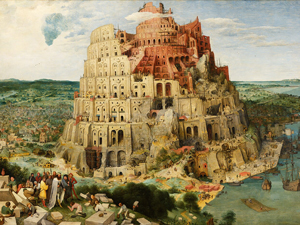
The Evolution of Language

The evolution of language has shaped our minds and culture—unlocking new ways to connect, create, and face challenges.


Ideas that Shaped Our Modern World

Driven to solve and seek, our evolution has unfolded through innovation and the pursuit of transcendence.

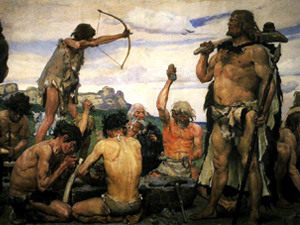
Tools & the Development of Contemporary Society

From stone tools to digital circuits, our creations shape who we are and the choices defining our future.

Our Mind in the Modern World

Technology has outpaced evolution. To thrive, we must consciously evolve by understanding the full capacities of our minds.

Latest Blog Posts:

Two women hugging and laughing in a park, communicating in a friendly and intimate way.

"Style-shifting", a linguistics term which describes changes in our patterns of speech around different people, reflects the idea that we all embody many personas that reveal themselves according to circumstance.


An illustration of a man in a business suit holding a telescope and briefcase, looking into the future, with a graph behind him.

Given the unreliability of economic forecasts, is there a way to make our predictions in economics a little more accurate, or, at the very least, more useful?

Flags of many countries of the world hang over an alleyway in Latin America.

There is consensus that one common parent language spawned all tongues in the Indo-European language group—spoken by over 3 billion people. But that parent language, Proto-Indo-European, is ascertained more through inference than direct evidence.

A female artist painting in her studio.

As artificial intelligence grows in leaps and bounds, so too does the idea that “the robots are taking over”. But as Ella Jane Mortensen writes, the dangers of AI may lie more in their impact on our minds and culture.

Subscription

Subscribe your Email address for latest news & updates

©2025, Institute for the Study of Human Knowledge. All Rights Reserved by ISHK

©2026, Institute for the Study of Human Knowledge. All Rights Reserved by ISHK