
Our Mind in the Modern World

Today, all around the world, technology has become a part of everyday life, and its capabilities are progressing rapidly. The world of our children bears little relationship to that of our grandparents. Our future will not be through the past, for biological evolution has not prepared us for a world in which communication is instant across continents, where thousands of images cross our path each day, and where we now control the fate of the Earth and the biological future of our species. Biological evolution needs to give way to conscious evolution.

An indoor passageway whose counters are the shape of a human head looking up.

Our Mind in the Modern World


The Modern World is Rapidly Changing

Robert Ornstein, PhD; David Sobel, MD, MPH; and Sally Mallam
Contributing Writers

The content of this section, unless indicated, represents Robert Ornstein’s award-winning Psychology of Evolution Trilogy and Multimind. It is reproduced here by kind permission of the Estate of Robert Ornstein.

Human beings are unique animals: all other animals live inside their original habitat, and they are adapted “by design” to it. We have created an unprecedented world for ourselves: the space age, nuclear energy, computers and AI, yet we remain biologically the same as we were in the Stone Age.

The world has been comparatively stable for tens of thousands of years, and for tens of thousands of years it has been our practice to take what we wanted from it without recompense. All that mattered was a rising standard of living. Only rarely, if ever, did we look back to examine the effect of these actions on the world, because our brains didn’t need to do so to survive and progress always led us forward.

From the Industrial Revolution in the mid-eighteenth century our “tool” use began to speed up, backed by powerful new energy sources: from coal, to gas, to electronics and nuclear energy, to the internet and renewable energy. And as we discovered different energy sources and later, digital technologies, the world changed radically, over and over.

Let’s look at changes in technology over just the last 50 years. Most of the technology we use today find their common ancestors from a product sold in the 1970s, but the scale of “tool” development since then has been astronomical. In the 70s the personal computer was in its infancy, and almost everyone was still telling time on analog clock faces with hour and minute hands. In 1973 when Motorola engineer, executive and “Father of the Cell Phone” Martin Cooper made the first truly mobile cellular phone call with the DynaTAC prototype walking down Sixth Avenue in New York City, pictures were captured on film which required developing. Today, we have digital cameras and smartphones that permit instantaneous capture and sharing on all the popular photo-sharing apps like Instagram, Twitter (“X”), Facebook, Snap, and TikTok. The first Light Emitting Diode (LED) digital wristwatch was launched in 1970. Today AI powers many products, including image-recognition software that can identify faces or objects in photos or videos; virtual assistants like Siri or Alexa that answer questions; and even robots that work autonomously alongside humans in factories or warehouses.

All these changes are unprecedented. And yet, we have the same mental system that we had ages ago, one that tries, in the face of everything, to keep things stable, simple, and neat.
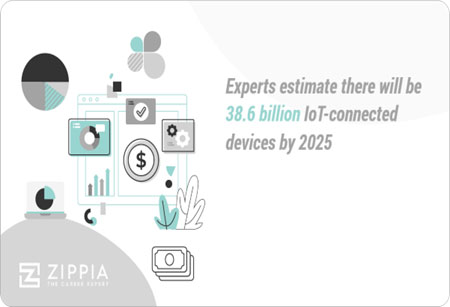
Here are some statistics on how fast technology is advancing:

  • There are 4.95 billion internet users in the world as of 2023.
  • There are 7.33 billion mobile phone users in the world.
  • It’s predicted that there will be 38.6 billion IoT-connected devices (smartwatches, etc.) around the world by 2025 and 50 billion by 2030.
  • There are 1.35 million tech startups in the world.
  • 93% of U.S. adults use the internet.
  • There are over 600,000 new internet users each day, on average.
  • Internet adoption rates have always been highest among 18- to 29-year-olds, with a 70% adoption rate in 2000 and a 99% adoption in 2020.
  • 97% of Northern Europe’s population has access to the internet, the highest penetration rate in the world.
  • Over 60% of the world’s population has a cell phone.
  • Of those mobile phones, almost 80% of those are smartphones.
  • As of 2018, there are approximately 22 billion devices around the world that are a part of the Internet of Things.
  • The Internet of Things (IoT) is the network of devices and machines that share information across the internet, including smartphones, cars, and smart home devices. It’s even starting to expand to the community- and city-wide devices such as traffic signals.
  • It’s estimated that the world will be using 50 billion IoT devices by 2030.
  • 97% of U.S. adults own a cellphone.

For these and more statics like these, visit: https://www.zippia.com/advice/how-fast-is-technology-advancing/

An Ancient Brain in a Modern World
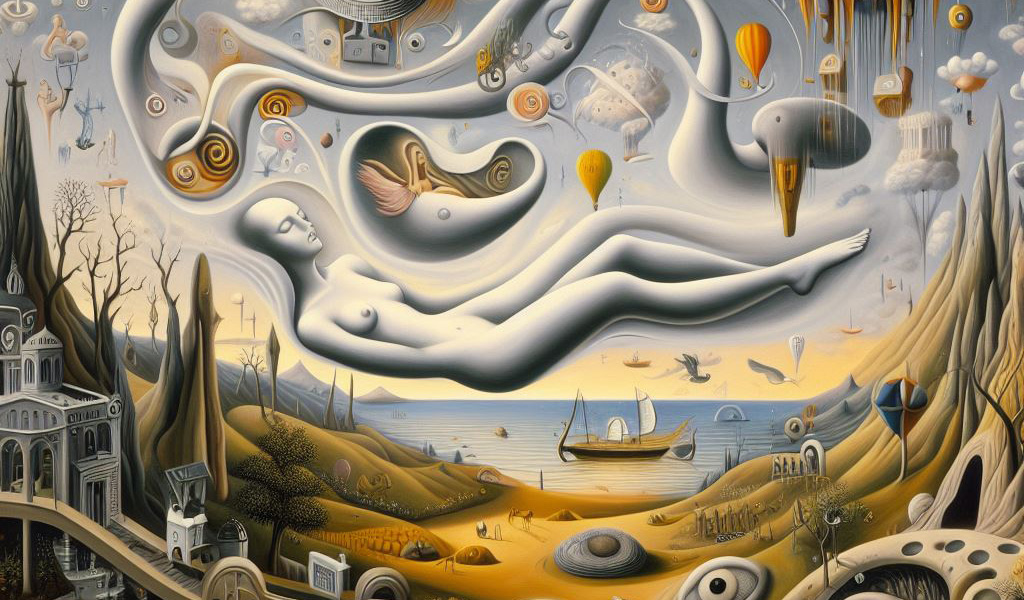
Many of the diverse global problems facing us today are of our own making. We can solve them, but first we need to understand who we are, and how our brain works every day.

Our Unconscious Minds

We are continuously making up a “virtual reality” inside our brain from the limited, tiny fraction of information and energy that passes through our senses. A “me first” system takes priority, since each person’s consciousness evolved for the primary purpose of ensuring that individual’s biological survival.

Maintaining a Stable World

Evolving and maintaining a stable view of our world was vital, of course. But it resulted in the evolution of cognitive abilities and perceptual tendencies that are important to understand, since they affect our behaviors and actions today. 

The Multiple Nature of Our Mind

There exist different centers of mind in the brain, and “we” often don't know what we're doing until we see what we do. Nonconscious routines lead us automatically, and thus unconsciously, along lines of thinking and action without our ever directing them.

Connecting with Others

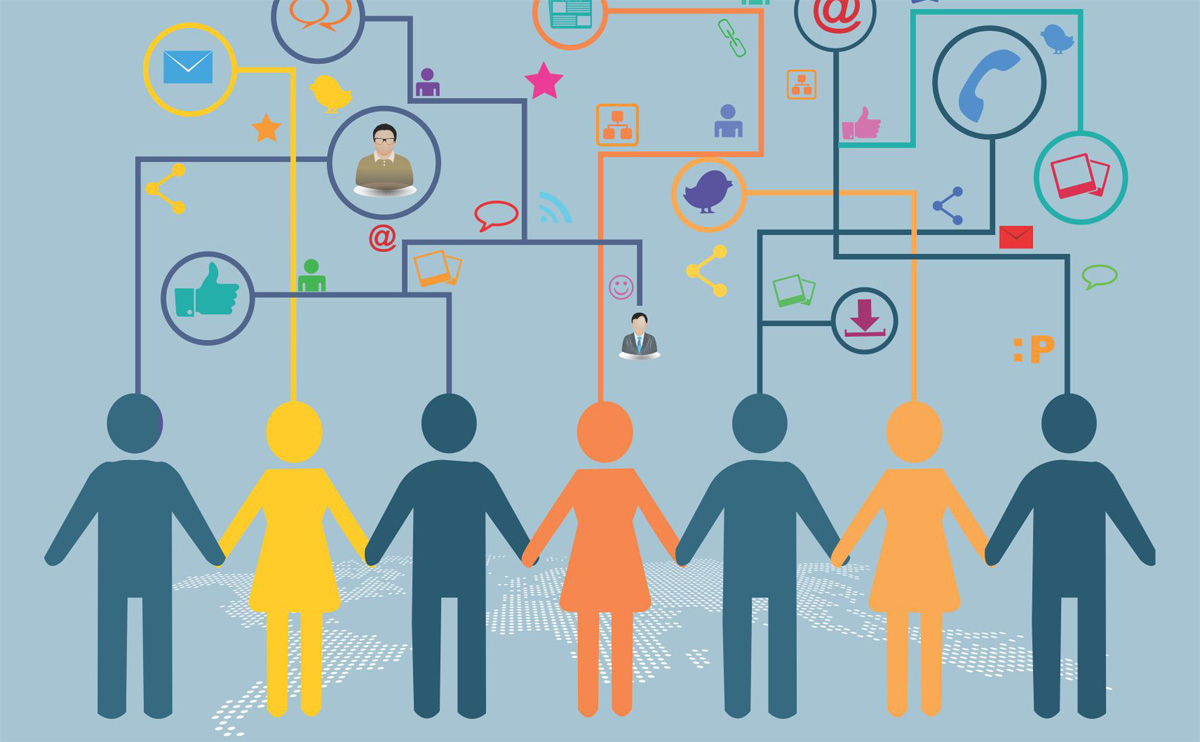
Our connection to others is key to our survival. It is foundational to all human societies, to the bands that survived the last Ice Age, to the civilizations, to big ideas and endeavors, to the resolution of today’s problems and to the world we dream of for our future.

Morality’s Long Evolution

For many years morality was believed to be sent down to us from God. There are now many studies that show empathic awareness and reciprocity in animals.  And it turns out that a precursor to human morality is even found in plant life.

Unconscious Associations

We learn about our physical world through direct experience. As a result, we evolved certain unconscious anomalies, some of which are quite surprising.

Higher Consciousness: The Brain’s Latent Capacities

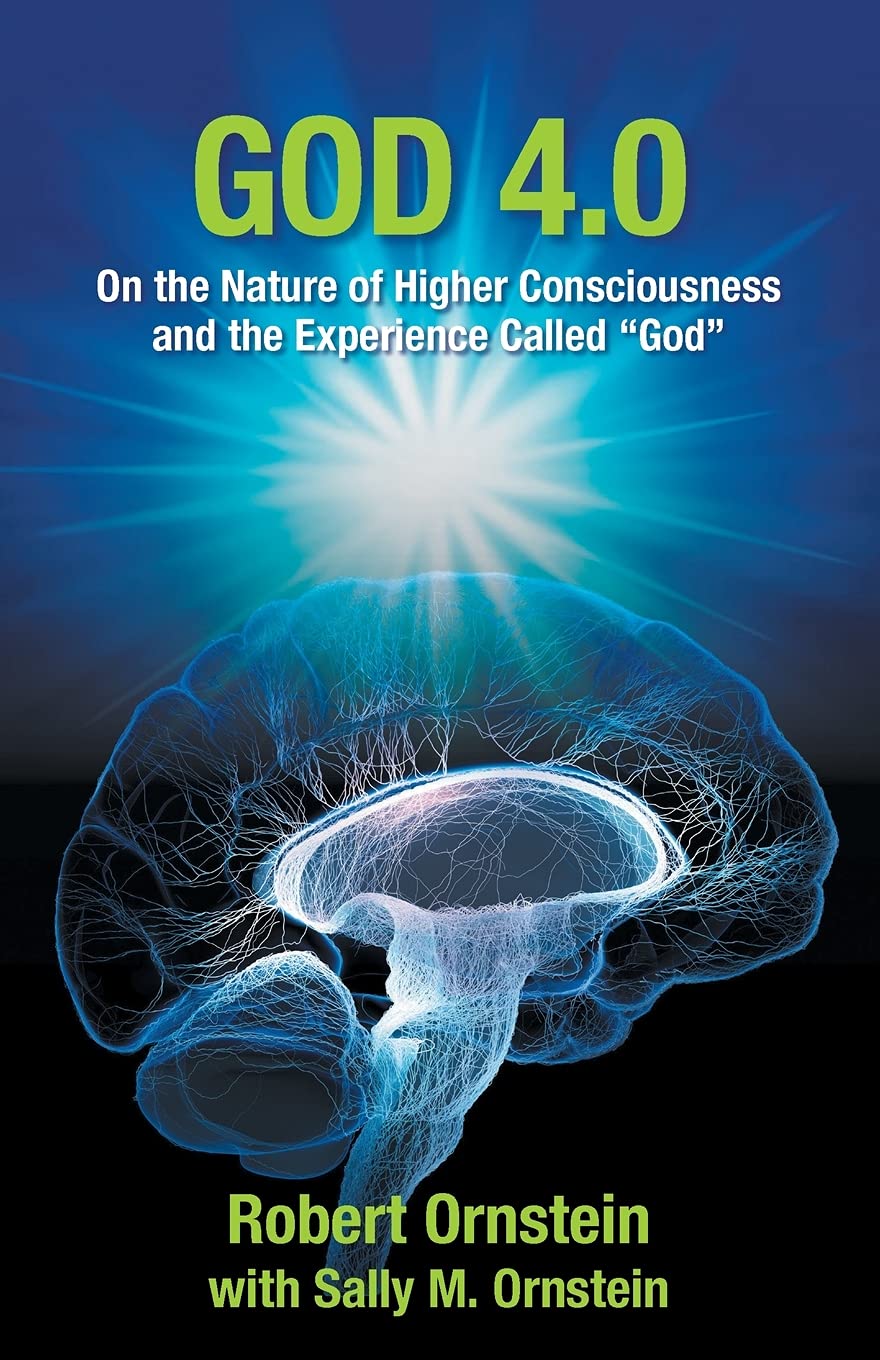
Two modes of consciousness coexist within each one of us: normal limited consciousness, that enabled us to survive since the Ice Age, and a second mode of consciousness that, when developed, accesses a deeper, more comprehensive, "objective" understanding of the world and our place in it.

An Ancient Brain in a Modern World

Many of the diverse global problems facing us today are of our own making. We can solve them, but first we need to understand who we are, and how our brain works every day.

Our Unconscious Minds

We are continuously making up a “virtual reality” inside our brain from the limited, tiny fraction of information and energy that passes through our senses. A “me first” system takes priority, since each person’s consciousness evolved for the primary purpose of ensuring that individual’s biological survival.

Maintaining a Stable World

Evolving and maintaining a stable view of our world was vital, of course. But it resulted in the evolution of cognitive abilities and perceptual tendencies that are important to understand, since they affect our behaviors and actions today. 

The Multiple Nature of Our Mind

There exist different centers of mind in the brain, and “we” often don't know what we're doing until we see what we do. Nonconscious routines lead us automatically, and thus unconsciously, along lines of thinking and action without our ever directing them.

Connecting with Others

Our connection to others is key to our survival. It is foundational to all human societies, to the bands that survived the last Ice Age, to the civilizations, to big ideas and endeavors, to the resolution of today’s problems and to the world we dream of for our future.

Morality’s Long Evolution

For many years morality was believed to be sent down to us from God. There are now many studies that show empathic awareness and reciprocity in animals.  And it turns out that a precursor to human morality is even found in plant life.

Unconscious Associations

We learn about our physical world through direct experience. As a result, we evolved certain unconscious anomalies, some of which are quite surprising.

Higher Consciousness: The Brain’s Latent Capacities

Two modes of consciousness coexist within each one of us: normal limited consciousness, that enabled us to survive since the Ice Age, and a second mode of consciousness that, when developed, accesses a deeper, more comprehensive, "objective" understanding of the world and our place in it.