The Changing World Economy
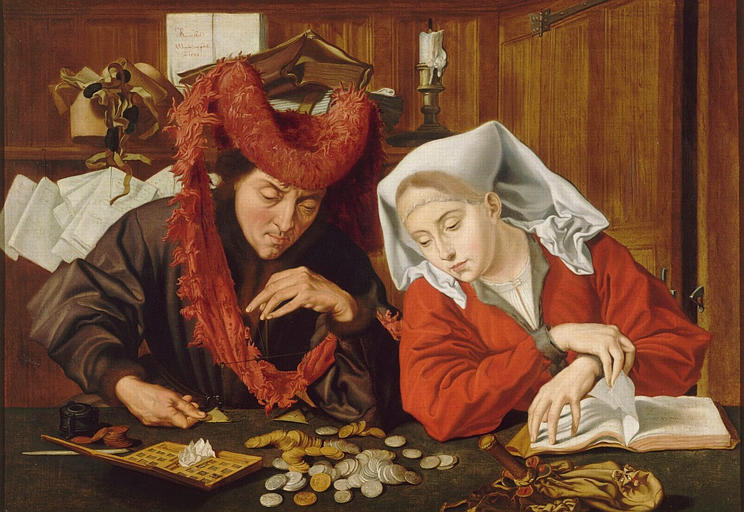
Trust, Faith and Confidence–Value and the Role of Money
For most of human existence, interchange has been governed by social reciprocity, our sense of obligation to be helpful, fair, and just according to tradition. So how did money – originally invented as a mere token of social obligation – get confused with true wealth and become the end in itself?

Risk, Gambling, and Financialization
Since 1970, the financial sector has increasingly turned away from the financing of industry and commerce and concentrated instead on the business of making money from money – the process of financialization – resulting in new ways to extract money without adding value to the rest of the economy.
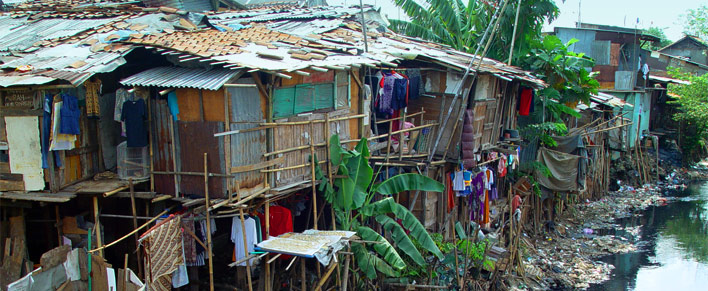
Aid: Ending Global Poverty
Growth of average incomes globally has resulted in a stunning decline in abject poverty. Yet more than a third of the world’s population – some 2.2 billion people – live on less than $2 a day, many without access to clean water, electricity, sanitation, and basic protection of the law. And the gap between rich and poor continues to widen. What can be learned from the successes and failures of the West’s $2.3 trillion aid investment over the past 50 years? What are the most promising solutions? And where do we go from here?
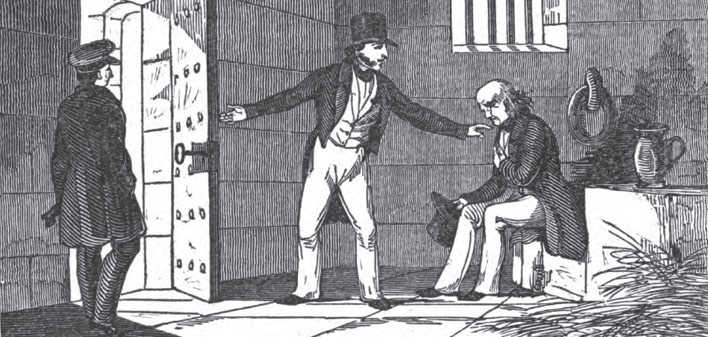
Forgiveness of Debt and the Creation of Money
For millennia it was a common practice to wipe out personal debts from time to time and begin social relations anew. But such a thing would be far more difficult today, in an economy driven by debt, rather than earnings, where even bankers and economists disagree on how money is created.
Trust, Faith and Confidence–Value and the Role of Money
For most of human existence, interchange has been governed by social reciprocity, our sense of obligation to be helpful, fair, and just according to tradition. So how did money – originally invented as a mere token of social obligation – get confused with true wealth and become the end in itself?
Risk, Gambling, and Financialization
Since 1970, the financial sector has increasingly turned away from the financing of industry and commerce and concentrated instead on the business of making money from money – the process of financialization – resulting in new ways to extract money without adding value to the rest of the economy.
Aid: Ending Global Poverty
Growth of average incomes globally has resulted in a stunning decline in abject poverty. Yet more than a third of the world’s population – some 2.2 billion people – live on less than $2 a day, many without access to clean water, electricity, sanitation, and basic protection of the law. And the gap between rich and poor continues to widen. What can be learned from the successes and failures of the West’s $2.3 trillion aid investment over the past 50 years? What are the most promising solutions? And where do we go from here?
Forgiveness of Debt and the Creation of Money
For millennia it was a common practice to wipe out personal debts from time to time and begin social relations anew. But such a thing would be far more difficult today, in an economy driven by debt, rather than earnings, where even bankers and economists disagree on how money is created.
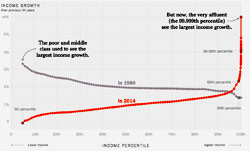
Our Broken Economy, in One Simple Chart
David Leonhard, New York Times
Three leading economists provide a dramatic look at the skyrocketing income growth of the 0.01% very rich vs. all other Americans over the past 34 years.
Cash, Food and Health Care All Help the Poor, but Something’s Still Missing
Nicholas Kristof, New York Times
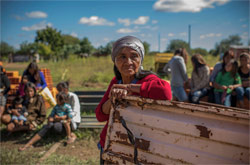
In a remote village in Paraguay, indigenous people are gaining hope and leaving poverty. The approach would work in rich nations, too.