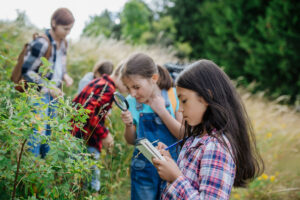
Forest Schools, Nature and the Divided Brain
With children spending more time indoors and immersed in digital environments, forest schools offer a radically different model of learning.

With children spending more time indoors and immersed in digital environments, forest schools offer a radically different model of learning.

There is consensus that one common parent language spawned all tongues in the Indo-European language group—spoken by over 3 billion people. But that parent language, Proto-Indo-European, is ascertained more through inference than direct evidence.

As artificial intelligence grows in leaps and bounds, so too does the idea that “the robots are taking over”. But as Ella Jane Mortensen writes, the dangers of AI may lie more in their impact on our minds and culture.

Statistics, whether in the service of advertising or politics, don't just hide the truth—they guide your mind to a particular version, or interpretation, of it.

In our screen and achievement-obsessed culture, the play instincts of children are being smothered, inhibiting their natural creativity and curiosity. Loosening the reins on childhood can help fix that.

The way in which different cultures describe and classify colors reveals differences in how they perceive the world. It also might help us navigate the increasingly polarized nature of our conversations, globally, into the future.