Humans Were Not Alone Until Recently
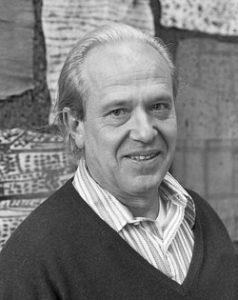
Dr. Luca Cavalli-Sforza was a pioneer in using genetic information to trace human evolution, history and patterns of migration. He recognized the importance of synthesizing information from diverse disciplines—genetics, archaeology, linguistics, anthropology and statistics—to explain how human populations fanned out over the earth from their original home in Africa. David Reich, a professor of genetics at Harvard Medical School, and author of Who We Are and How We Got Here describes Dr. Cavalli-Sforza as the first scientist to predict that there would be “enough information in genes to determine where people came from in the world and who they’re most closely related to.”
The genetic record is “like a lost library … and we’re just starting to learn the language of all those books that we have uncovered.”
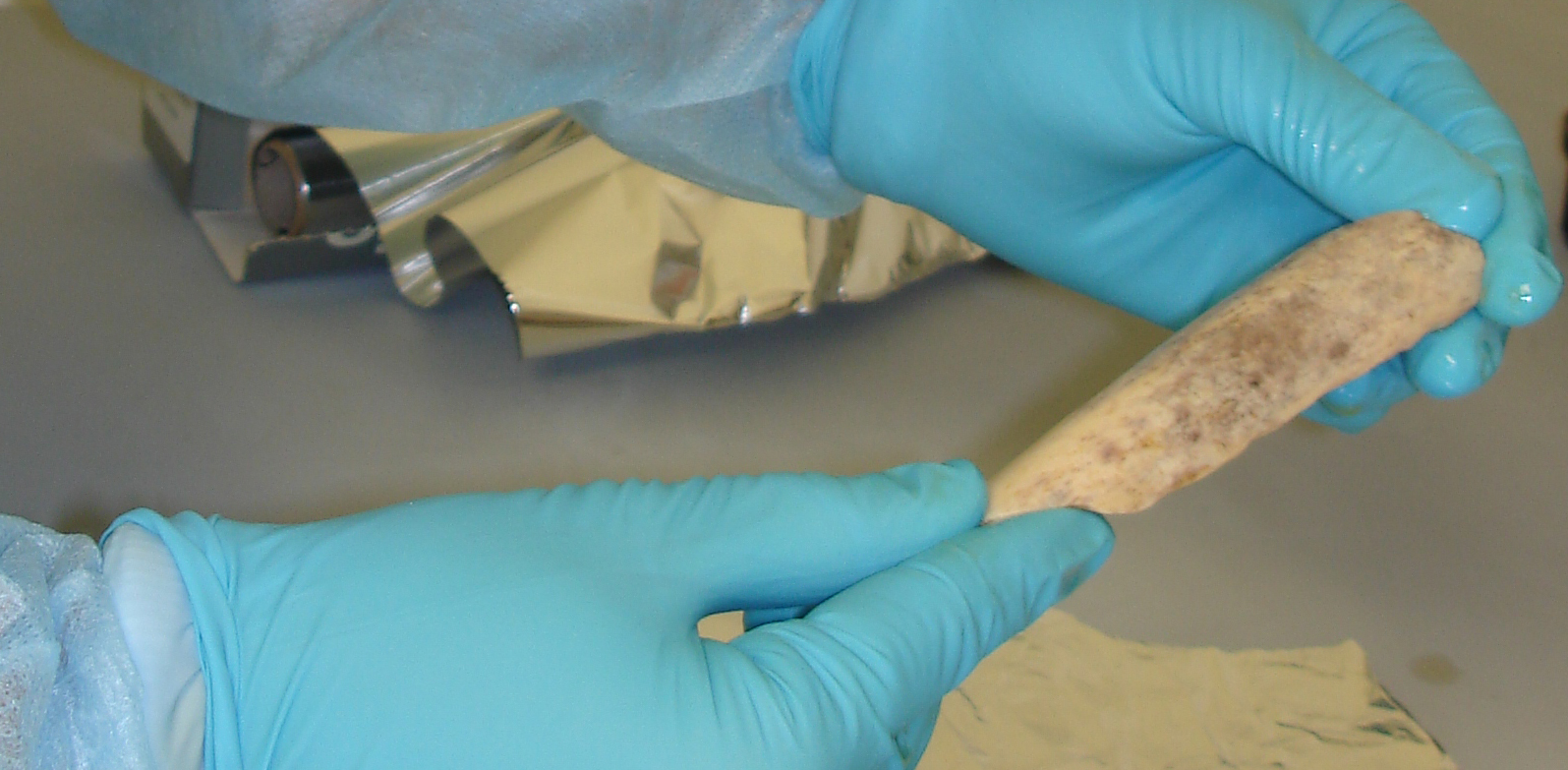
The mapping of the complete genetic make-up (genome) of a human was first completed in 2003 and transformed the ability to retrieve DNA from archaeological material. Rapid advances in genetic technologies since then have enhanced our ability to identify remains in time and address many mysteries of the past, like the migration of people and the evolution and spread of culture through periods of time from hundreds to tens of thousands of years.
Today scientists can read billions of letters from the genomes of ancient humans and other organisms, changing our view of history and evolution. According to Johannes Krause, director of archaeogenetics at the Max Planck Institute for the Science of Human History in Jena, Germany, this genetic record is “like a lost library … and we’re just starting to learn the language of all those books that we have uncovered.”
A Record of Our Hominid Ancestors
For anthropologists, too, the advantage of human aDNA is that it provides information that could not be gleaned from fossils or artifacts. Genetic evidence demonstrates that an archaic species branched from Homo erectus some 1.4 to 0.9 million years ago and then branched again between 770,000 and 550,000 years ago; one branch was anatomically modern humans and the other an archaic lineage that underwent a further division into Neanderthals and Denisovans between 470,000 and 380,000 years ago.
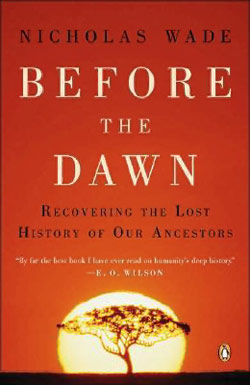
In his book Before the Dawn, Nicholas Wade details findings from aDNA through which we can track our evolution in Africa from ape to Homo sapiens, and map biological, physiological and behavioral changes more accurately than ever dreamt of prior to this recent ability.
The Benefits of Interbreeding
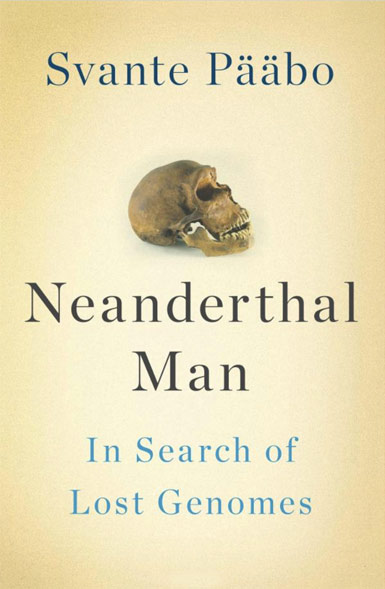
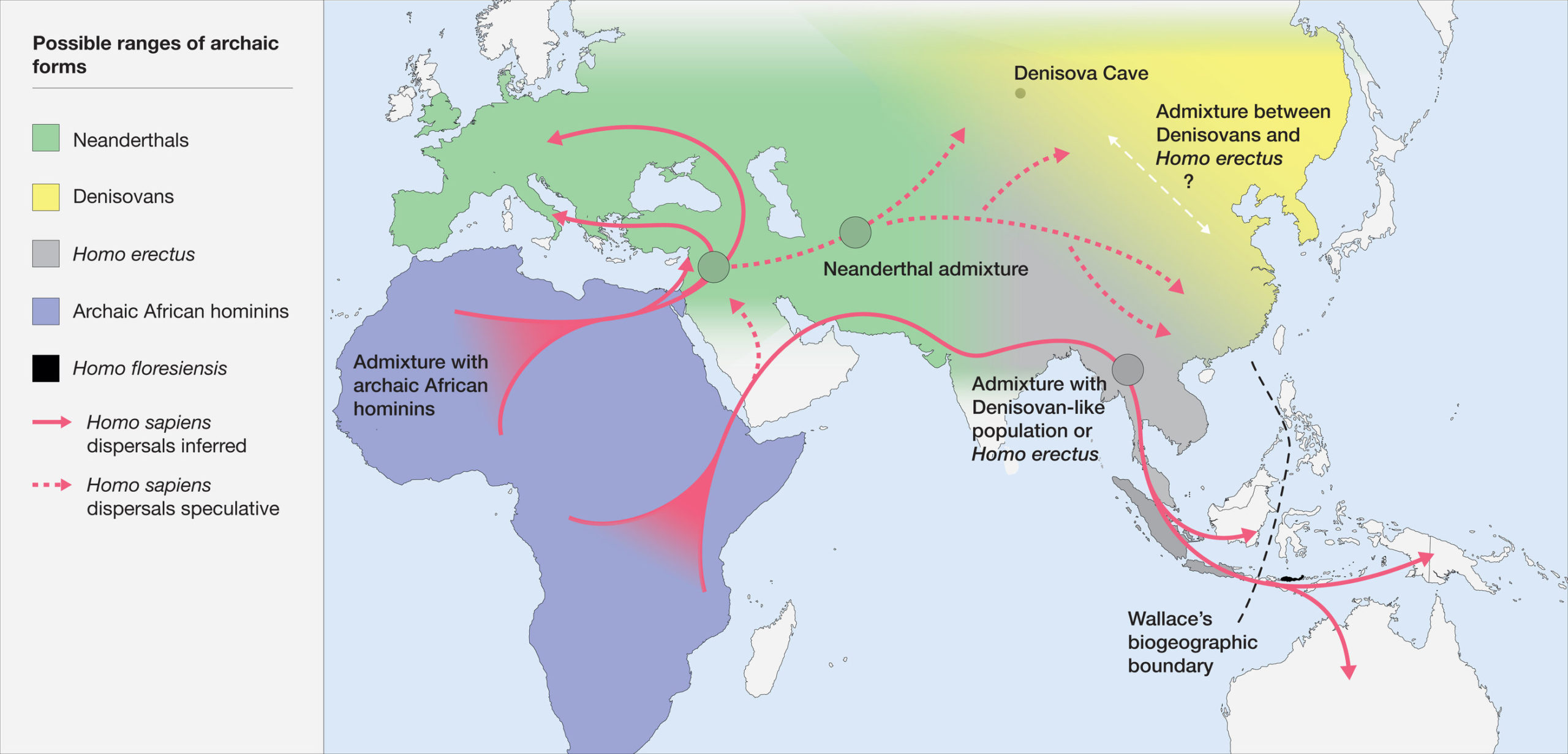
David Reich, Nicholas Wade, and Thomas Suddendorf all describe in their books how ancient genomes show definitively that our ancestors not only met but mated with Denisovans and Neanderthals—multiple times—between 100,000 and 40,000 years ago. This interbreeding conveyed genetic adaptations that improved our chances of survival.
We see evidence of this interbreeding in modern humans today, for example in an adaptation to high altitude inherited by ancestors of Tibetans who bred with one line of Denisovans; and in the ability of present-day Europeans and East Asians to withstand colder temperatures than do people from elsewhere, thanks to Neanderthal genes. By interbreeding with them, our ancestors inherited thousands of years of adaptation including immunities to local bacteria, viruses, and parasites. Scientists suggest that how some European people respond to the flu or to other viral infections today may well be influenced at least in part by their Neanderthal inheritance. Recent findings also link Neanderthal DNA to traits such as increased pain sensitivity, elevated responses to environmental allergens, and even increased fertility, underscoring its lasting impact on modern human biology.
Basic Information about Genomics
National Human Genome Research Institute
Quick lessons to help you learn more about genomics, so you can explore your own data in a more meaningful way.
Culture Change: War Bands Hooked Up with Neolithic Farm Women
LiveScience
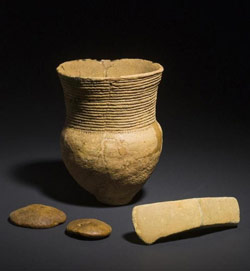
Researchers find that the appearance in Europe of pottery imprinted with cord-like designs may have been the result of intermarriage between Neolithic farm women of Europe and incoming warriors from the Pontic and Caspian steppes near the Black and Caspian seas.

How Europeans Evolved White Skin
Ann Gibbons, Science
A recent study shows that pale skin, as well as other traits such as tallness and the ability to digest milk as adults, arrived in most of Europe relatively recently.
Scientists Find Evidence of ‘Ghost Population’ of Ancient Humans
Ian Sample, The Guardian
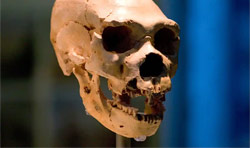
Traces of unknown ancestor emerged when researchers analyzed genomes from west African populations.
Alex, Bridget. “Everything Worth Knowing About … Ancient DNA.” Discover Magazine, June 19, 2017. Updated April 10, 2020.
Cooke, Emily. “10 unexpected ways Neanderthal DNA affects our health.” LiveScience, May17, 2024.
Dannemann, Michael, Aida M. Andrés, and Janet Kelso. “Introgression of Neandertal- and Denisovan-like Haplotypes Contributes to Adaptive Variation in Human Toll-like Receptors.” The American Journal of Human Genetics 98, no. 1 (January 2016): 22–33. https://doi.org/10.1016/j.ajhg.2015.11.015
Deschamps, Matthieu, Guillaume Laval, Maud Fagny, Yuval Itan, Laurent Abel, Jean-Laurent Casanova, Etienne Patin, and Lluis Quintana-Murci. “Genomic Signatures of Selective Pressures and Introgression from Archaic Hominins at Human Innate Immunity Genes.” The American Journal of Human Genetics 98, no. 1 (January 2016): 5–21. https://doi.org/10.1016/j.ajhg.2015.11.014
Faux, Pierre, Li Ding, Luis Miguel Ramirez-Aristeguieta, J. Camilo Chacón-Duque, Maddalena Comini, Javier Mendoza-Revilla, Macarena Fuentes-Guajardo, et al. “Neanderthal Introgression in SCN9A Impacts Mechanical Pain Sensitivity.” Communications Biology 6, no. 1 (October 10, 2023). https://doi.org/10.1038/s42003-023-05286-z
McArthur, Evonne, David C. Rinker, and John A. Capra. “Quantifying the Contribution of Neanderthal Introgression to the Heritability of Complex Traits.” Nature Communications 12, no. 1 (July 22, 2021). https://doi.org/10.1038/s41467-021-24582-y
Reich, David. Who We Are and How We Got Here: Ancient DNA and the New Science of the Human Past. Knopf Doubleday Publishing Group, 2019.
Roberts, Patrick, and Brian A. Stewart. “Defining the ‘Generalist Specialist’ Niche for Pleistocene Homo Sapiens.” Nature Human Behaviour 2, no. 8 (July 30, 2018): 542–50. https://doi.org/10.1038/s41562-018-0394-4
Suddendorf, Thomas. The Gap: The Science of What Separates Us from Other Animals. Basic Books, 2013.
Wade, Nicholas. Before the Dawn: Recovering the Lost History of Our Ancestors. Penguin Publishing Group, 2007.
Zeberg, Hugo, Janet Kelso, and Svante Pääbo. “The Neandertal Progesterone Receptor.” Edited by Daniel Falush. Molecular Biology and Evolution 37, no. 9 (May 21, 2020): 2655–60. https://doi.org/10.1093/molbev/msaa119