Photo: Adobe Stock
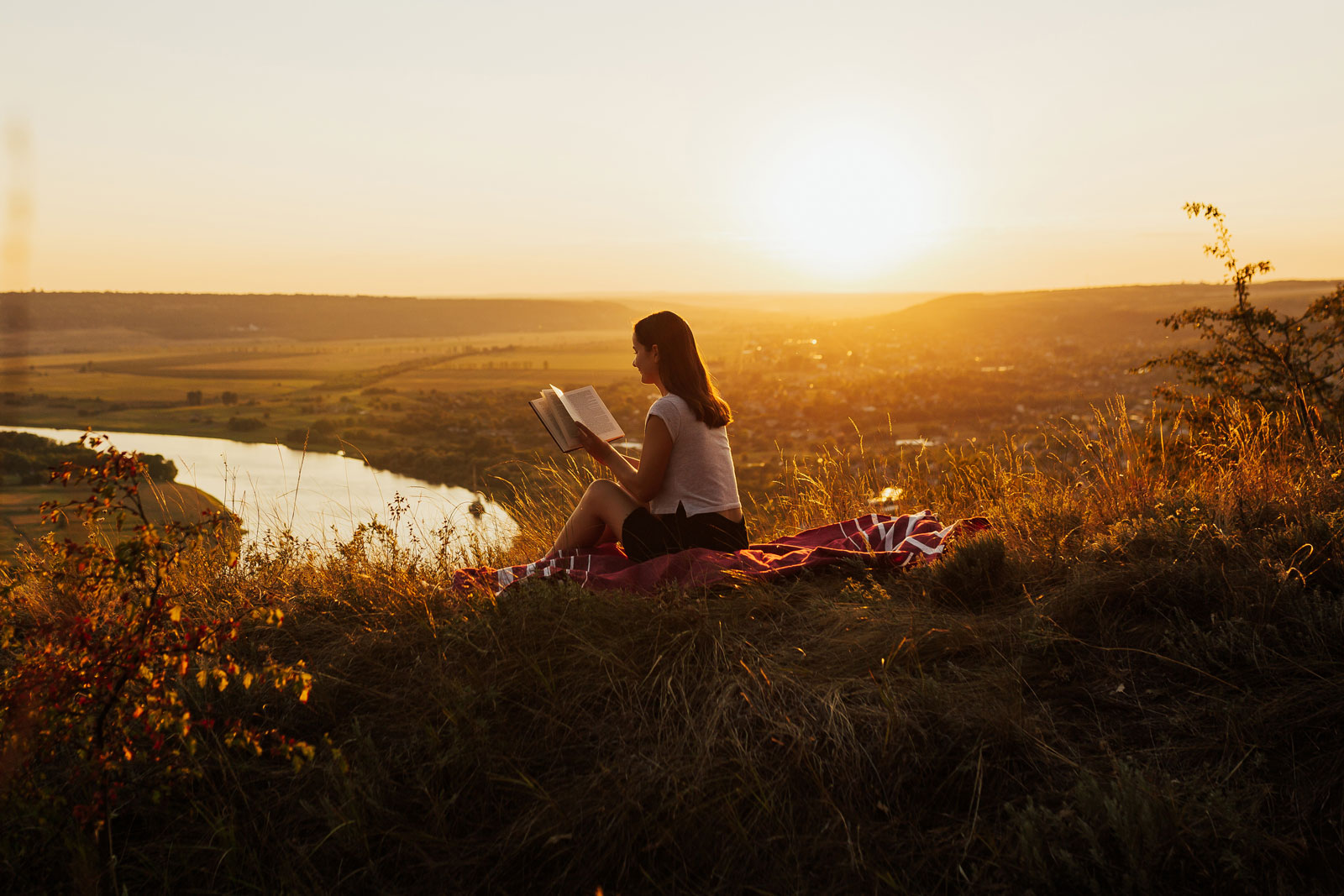
It is not rare to hear stories from the past of children being pushed outside of the house to play after school and on weekends, not expected to return until suppertime. There are endless ways a child might spend this free time: turning over rocks in streams to find critters, biking the neighborhood with friends, or maybe building a personal fort in the woods. Yet it seems this type of wild childhood is quickly becoming the exception rather than the rule. As the “safer,” flashier, and more addictive digital world opens its shiny screen trapdoors to children, playtime in nature feels even more crucial. Richard Louv, author of Last Child in the Woods, has proposed that children today suffer from “nature deficit disorder,” due to not only the increased presence of phones and tablets, but also owing to a loss of natural areas. Increasingly, more people than ever are living in urban spaces. By contrast, children who are still able to spend significant free time outdoors benefit from the opportunity to explore, experiment, and take risks in a way they are unable to in a concrete jungle. Just as crucially, they are able to develop a personal relationship to the natural world.
In Scandinavia, a region well known for its outdoor culture, many communities have “forest schools” where preschool and kindergarten-aged children spend most, or all, of the school day outside, usually in a woodland setting. These programs prioritize both structured and unstructured play and learning in the open air—no matter the weather. Children arrive at school with galoshes on rainy days and with warm coats and extra layers in winter. Instructors encourage their students to discover nature directly, engage in imaginative play, and negotiate relationships with their classmates, solving problems together.
Among innumerable psychological benefits, children who are exposed to diverse natural environments like the ones in forest schools also have more robust immune systems, getting sick less often, and developing fewer allergies than children who spend most of their time inside. Children who know the forest, developing a close relationship with it, also get the chance to experience where the materials we use in our daily lives come from: wood and paper from trees, food from plants in the ground, and leather from animal skin. Later on, they learn that even plastic comes from fossils and computers from underground metals. Fully outdoor forest schools generally serve preschoolers and kindergarteners. The curriculum shifts towards traditional classroom settings as children get older and learning becomes more technical. The forest school concept has spread across the UK, North America, and Europe.
Saltamontes (“Grasshoppers”), an outdoor preschool in the town of Collado Mediano in central Spain, was the country’s first forest school. Children at Saltamontes typically begin each day with playtime at a patch of sand, surrounded by tall pines, which transforms into a small pond after rainy days. Later they hike through the holm oak forest, playing “train,” where the child chosen to be the leader that day directs stops at various interesting rocks or plants. For lunch, the leaders lay out a large blanket on the ground and the children eat together, then enjoy free time playing with the various props they find in the natural landscape: sticks, plants, rocks, and of course, their imagination. At the end of the day, children gather in a circle and are told a story together before their parents pick them up.
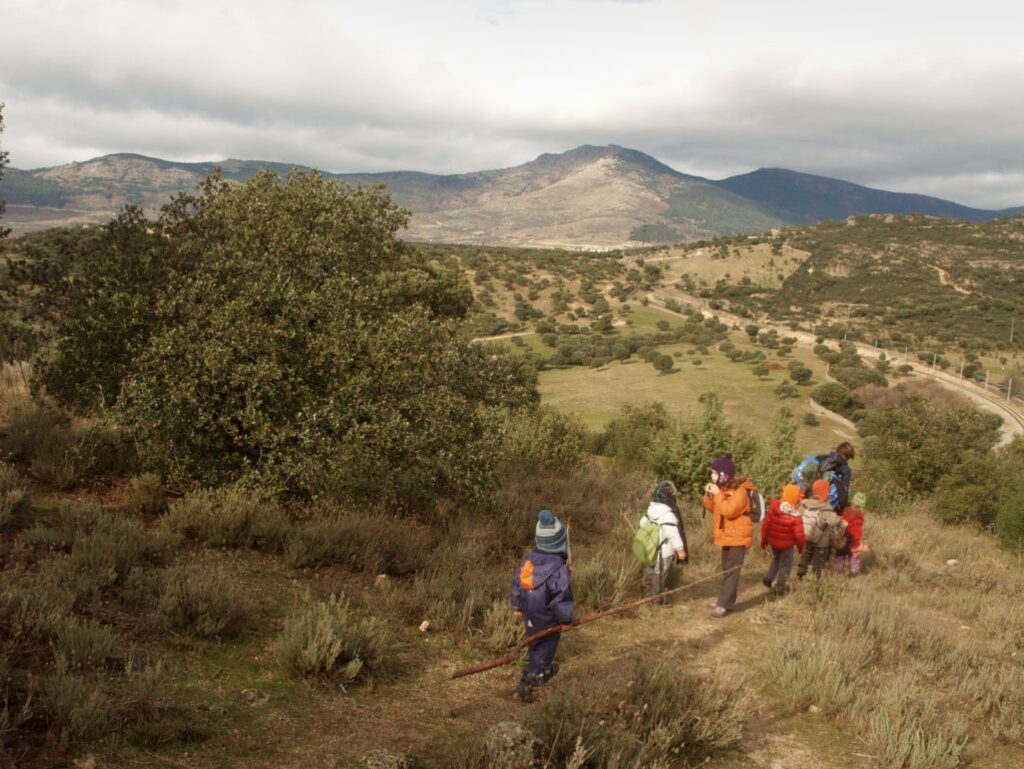
For six-year-old graduates of Saltamontes, the previous years of outdoor learning and play does more than provide them with lasting positive associations of nature and friendship, it may help create a less mechanical backdrop for their earliest mental processes to model the world after. Of course, this experience is not exclusively available to kids who attend forest schools; myriad other less formalized experiences are available to help preserve and grow their inborn connection to the outdoors. A caring adult, parent, or teacher has the power to encourage their kid to keep a nature journal, help them plant vegetables in a garden, or give them the freedom to climb a tree. Any time spent in wild places and observing natural phenomena can help cultivate balance in our own brains and in how we conceive of the world.
Consider that most ordinary classrooms consist of four walls, filled with desks, chairs, perhaps individualized cubbies for storing backpacks, and a screen or whiteboard at the front. These spaces usually include a lot of straight lines and compartments, with right angles and neat boxes forming an orderly, often unquestioned, backdrop for learning. This organization of our environment may play more of a role in creating our mental map of the world than we realize, influencing our perception and cognition. The capacity for an external setting to impact us psychologically has been long known by architects, who often design certain spaces to evoke the emotions or mental patterns appropriate for that particular setting—such as in sacred religious buildings like cathedrals and mosques. The ubiquity of straight lines and hard 90-degree angles in our physical constructs, especially in developed Western environments, may in fact be restricting human thought—dampening creativity and flexibility. This process of being conditioned to such linear environments begins in early childhood, in their first indoor classrooms.
If that isn’t a powerful enough influence on kids, the linear architecture of the digital realm is also deeply impactful. Today, most school curricula throw young students headfirst into digital space, encouraging interactions with computer programs, algorithms, and games. This 2D universe is endlessly boxed and compartmentalized, organized logically according to rules of cause and effect. Causal trajectories are linear, singular and direct. Content appears only within its limits: videos in rectangular shapes and computer tabs neatly parceling out each page. I press on the F key and an F appears, I click on a link and I arrive there. Interestingly, when a program malfunctions due to an error, this is sometimes referred to as a “bug” or “virus,” invoking the wild unpredictability of the natural, living world. Children are exposed to this version of a hyperlogical reality not only at school but at home, on personal devices; again, often from a very young age.
Yet how “real” are all of these linear elements that underpin our physical and digital worlds, and through which we inculcate our young? British psychiatrist and scholar Iain McGilchrist has written and spoken extensively on the different ways the left and right hemispheres of the brain attend to the world—and the negative effects of our heavily left-brained, apparently overly rational, culture. Consider this quote, from his book, The Master and His Emissary: The Divided Brain and the Making of the Western World:
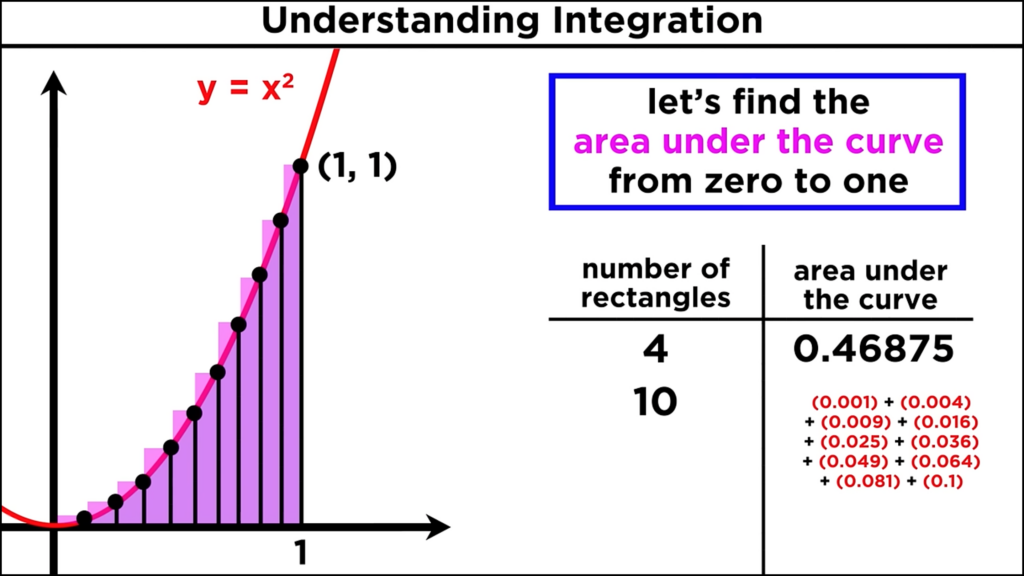
The left hemisphere loves straight lines, not curves or circles. It can approximate a curve, however closely, only by the expedient of laying ever more tangents. No straight lines are to be found in the natural world. Everything that really exists follows a series of curved shapes to which the logical products of the human mind can only ever approach tangentially—flow, once again, reduced to a series of points.
The left-brain approach shows up clearly in calculus: a smooth curve is measured by dividing it into tiny rectangles, as seen below. This is foundational to science, engineering and economics, but encourages us to view the world as a series of neat, measurable pieces.
In nature, outside human mechanical invention, forms are curved, fluid. Look closely and see the rough surface of tree bark, the roundness of the moon, the ever-changing shape of clouds, the way a millipede rolls into a tight ball when provoked. Look closer and observe the web of complex ecological relationships which infinitely rely on and influence each other. These shapes and relationships are not singular or linear. In their pure existence, unanalyzed by the prying human mind, they are more aligned with the world as the right brain sees it—reflecting the unpredictable and beautiful language of music, poetry, and dance.
Exposing children—and also adults—more frequently to the tactile and relational outdoor world can help encourage more flexible, spacious, and creative ways of thinking. Learning about and building familiarity with processes and organisms in nature may also provide grounding frameworks which can serve as powerful metaphors for understanding the complex relationships we encounter every day, both within and without.
William Wordsworth, in The Tables Turned, writes:
Sweet is the lore which Nature brings;
Our meddling intellect
Mis-shapes the beauteous forms of things:—
We murder to dissect.
Enough of Science and of Art;
Close up those barren leaves;
Come forth, and bring with you a heart
That watches and receives.
Ella Jane Mortensen holds a BA in international studies, specialising in global health, the environment and Europe, with a minor in philosophy. Her work experience includes tutoring, textbook editing and teaching English in Spain.
Bakalova, Ema. “Emotional Architecture: How Curves and Lines Influence Human Experience.” Architizer. Accessed February 17, 2026.
Benke, Erika. “How forest schools boost children’s immune systems.” BBC Future, November 1, 2023. Accessed February 17, 2026.
Guzman, Karen. “In developing immunity to allergens, a little ‘dirty’ goes a long way.” Yale News, Yale University, January 28, 2026.
Louv, Richard. Last Child in the Woods. Algonquin Books, 2008.
McGilchrist, Iain. The Master and His Emissary: The Divided Brain and the Making of the Western World. Yale University Press, 2009.
Saltamontes. “Un día en Saltamontes.” Saltamontes: Grupo de Juego en la Naturaleza. Accessed February 17, 2026.
Villavicencio, Alvaro Puertas. “Architecture as Extension of the Mind.” The Centre for Conscious Design, October 7, 2019. Accessed February 24, 2026.
Wild Wonder Foundation. “What is Nature Journaling?” Wild Wonder Foundation, https://www.wildwonder.org/what-is-nature-journaling.