The Power of New Perspectives and Social Activism in Adolescence
davidjlee, Wikimedia Commons
By Kathleen Mazor, EdD, MS
Contributing Writer
Recent research has shed new light on the importance of abstract thought and how adolescents think about issues. In a recent longitudinal study, researchers at the University of Southern California asked young people aged 14 to 18 to react to a set of very brief true stories about people in different situations. Researchers recorded and analyzed what participants said about the stories, focusing on whether the teen spoke about abstract ideas beyond the specific situation in the story (referred to as “transcendent thinking”). They followed up with these participants twice over five years and found that teens who had engaged more in this type of thinking had greater increases in the coordination of the two brain networks: the default mode network and the executive control network. Additionally, those with this greater neural network coordination reported greater self-liking and relationship satisfaction. The researchers suggest that “The findings reveal a novel predictor of mid-adolescents’ neural development and suggest the importance of attending to adolescents’ proclivities to engage agentically with complex perspectives and emotions on the social and personal relevance of issues, such as through civically minded educational approaches.”

In other words, encouraging adolescents to think about broader social, ethical, and moral issues and to consider different perspectives may not only boost brain development but also lead to greater satisfaction later in life.
Moreover, educating adolescents about the changes they are going through can better equip them to handle challenges and grow from their experiences.
Friends are influential in influencing adolescents’ interests, but so are parents and teachers. In fact, recent research suggests that teachers are particularly important in influencing adolescents from less privileged backgrounds to develop an interest in social issues.
Young people are often passionate about issues and eager to take action to uphold their values. Dr. Eva Telzer, a professor of psychology and neuroscience at the University of North Carolina Chapel Hill, highlights the impressive ways that teens get involved. In Dr. Telzer’s words: “They’re leading social movements. They’re also doing this at a smaller scale, whether that be contributing to their family or helping their friends or volunteering at their local community. Some teens do this at such a huge level. So leading the climate change movements, leading these bigger scale movements that have gotten tons and tons of people involved, but it doesn’t have to happen at that scale. And adolescents in their everyday lives are doing activities that are prosocial and community oriented. And they’re not doing this just to get into college for example, but there’s research showing that these brain regions involved in reward sensitivity and social sensitivity are activated, suggesting that it really does bring them joy to engage in this. And it is a meaningful activity for adolescents.”
Among the most famous young activists are Greta Thunberg, who began her climate activism at just 15 and was nominated for the Nobel Prize, and Malala Yousafzai, who survived an assassination attempt for advocating for education for girls and won the Nobel Peace Prize (shared) when she was 17. She tells her story in the bestselling book I Am Malala. Their stories are well known, but they are far from alone in their impact.
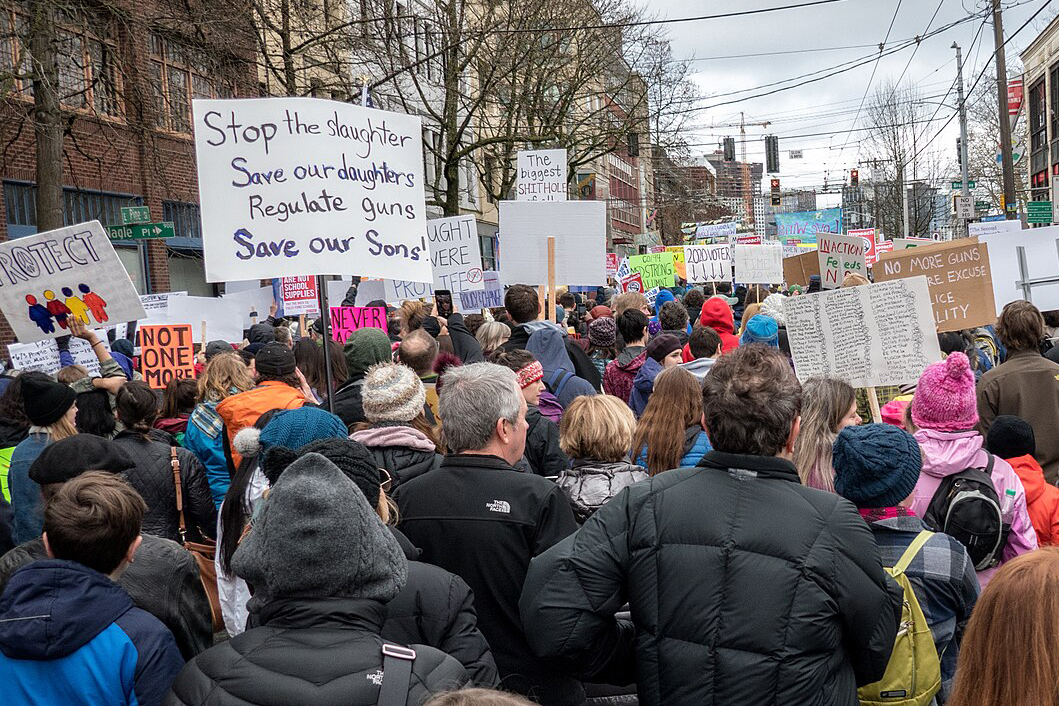
In the US, the March for Our Lives movement, ignited by the Parkland school shooting in 2018, showcases the power of young people in the fight for gun safety. Led by students, this movement quickly gained national attention with their passion and drive. They redefined gun violence as a broader issue affecting all children and rallied other youth organizations to join their cause. Their efforts led to a massive nationwide march and boosted youth voter turnout in the midterm elections, challenging established interests like the NRA. Since then, March for Our Lives has been a major advocate for gun safety, helping to pass over 250 gun safety laws and increasing youth engagement in politics.
For teens dealing with mental health challenges, feeling supported can be lifesaving. Diana Chao, founder of Letters to Strangers, knows this firsthand. Immigrating from China when she was nine years old, and growing up in poverty, she faced significant struggles. She tells her story: “So I was growing up underneath the poverty line with my parents, who did not speak English at all, and I was trying to assimilate and find my identity in a town that was vastly, vastly majority white. And so over time, especially because I was growing up in a very abusive household, I started to believe in everything that was said about me, that blamed everything upon me. And by the time I was about thirteen years old, I was diagnosed with bipolar disorder.” Diana’s role as a caregiver for her young brother gave her a reason to carry on living. Diana ultimately transformed her personal pain by writing letters to strangers. Starting with a chapter in her high school, Diana founded Letters to Strangers, which is now the largest global youth-run nonprofit focused on helping youth with mental illness. Reaching across six continents, the organization continues to support and encourage youth to write anonymous letters about their struggles, sharing their vulnerabilities and offering support to others. In addition, the organization offers peer education on mental health and policy advocacy.
These prominent young activists, and many like them, demonstrate the impressive impact of educating and empowering young people to tackle real-world challenges.
Casey, BJ and Diana Chao. “The teen brain: Mysteries and misconceptions.” Interview by Emily Underwood, April 26, 2023, posted April 27, 2023, by Knowable Magazine. https://dana.org/resources/the-teen-brain-mysteries-and-misconceptions/
Fox, MeiMei. “Teen Titans: 13 Young People Making an Outsized Positive Impact.” Forbes, November 5, 2023.
Gotlieb, Rebecca J. M., Xiao-Fei Yang, and Mary Helen Immordino-Yang. “Diverse Adolescents’ Transcendent Thinking Predicts Young Adult Psychosocial Outcomes via Brain Network Development.” Scientific Reports 14, no. 1 (2024). https://doi.org/10.1038/s41598-024-56800-0
Mills, Kim (host). Speaking of Psychology, podcast, Encore, Episode 203, “Understanding the teenage brain, with Eva Telzer, PhD.” American Psychological Association, updated July 2023. https://www.apa.org/news/podcasts/speaking-of-psychology/teenage-brain
Tamez-Robledo, Nadia. “How Writing ‘Letters to Strangers’ Helps Students Who Need Mental Health Support.” Edsurge, March 22, 2023.
Wanders, Frank H.K., et al. “The Role of Teachers, Parents, and Friends in Developing Adolescents’ Societal Interest.” Scandinavian Journal of Educational Research 65, no. 5 (2020): 736–51. https://doi.org/10.1080/00313831.2020.1754901