
Humanity’s Next Step
Generated with AI
The content of this section, unless indicated, represents Robert Ornstein’s award-winning Psychology of Evolution Trilogy (God 4.0, The Evolution of Consciousness and The Psychology of Consciousness) and Multimind. It is reproduced here by kind permission of the Estate of Robert Ornstein.
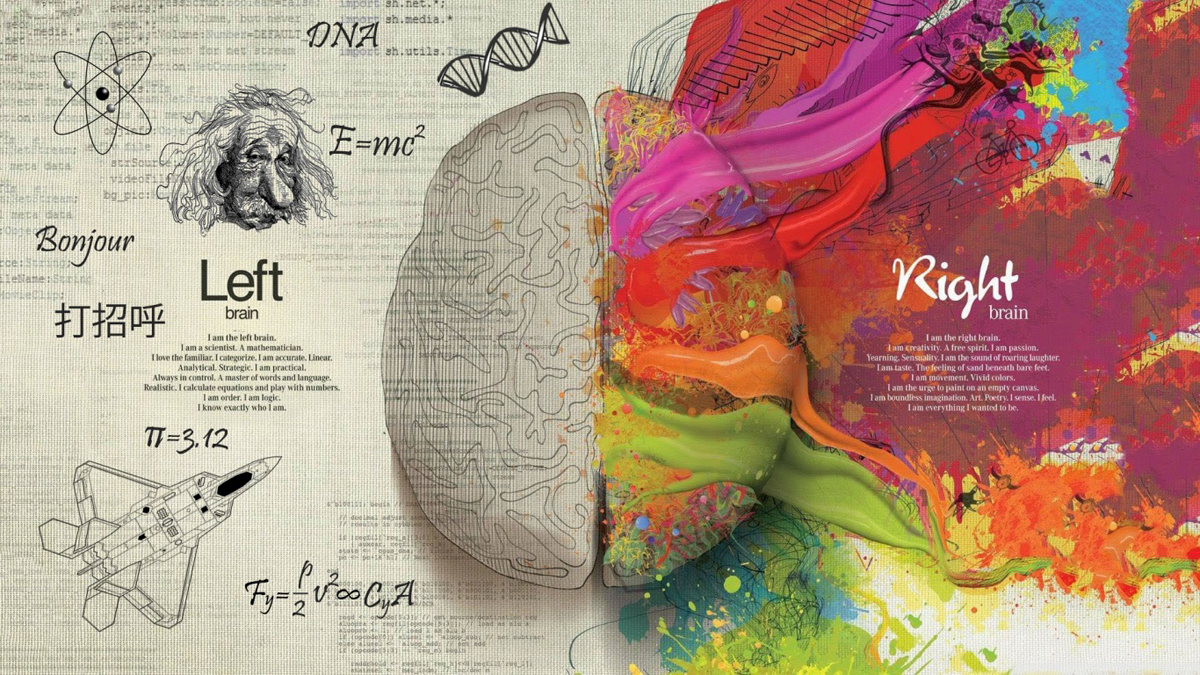
Consciousness changes continually within each of us and does so radically each day. It shifts from the hallucination of dreams, to the fluid thought that is experienced in hypnagogic states, to narrowly focused workaday full alertness—and to everything in between. This fluidity of our minds makes a possible alteration in consciousness closer to our daily experiences than we usually assume.
This alternate system is the activation of an innate network of connections that, when developed, can access an awareness of a parallel reality, one that provides insights and understanding that are more objective—“outside the Self.” To do this, areas inside the brain temporarily shut off normal thinking to make way for this new level of understanding. It’s a further development of what we experience when we get an insight into how another person is thinking, or when we suddenly discover the solution to a problem.
Normal thinking, or normal consciousness, evolved for the primary purpose of ensuring each individual’s biological survival, so its major concern is “ME.” Reflect now on what it’s like when you suddenly come up with a solution to a problem that’s been haunting you for a while. It’s usually when we’re distracted away from self-talk and self-reflection, away from thinking about what others think of us, what we need to do and why, or when we’re distracted by something else that absorbs our attention. Einstein used to play the violin whilst waiting for an insight. Sometimes a solution pops into our mind the moment we wake up. You may have noticed that when, for example, a painting or poem you’re creating works, is when you’re totally taken up with it, so that it seems to happen of its own accord, without your personal intervention. Experiences like these mark the beginning activation of this continuum.
As we mention in Our Emotions: How and Why they Operate, we experience awe when faced with something unfathomably vast or incomprehensively marvelous like a solar eclipse or great work of art. This experience can also give us a sense of shifting away from the “me first” focus of normal consciousness.
The Experience of Awe
Awe is a feeling of wonder we experience when faced with something unfathomably vast or incomprehensively marvelous — such as panoramic vistas, the incredibleness of nature, childbirth, and great works of art.
It involves a sense of perceptual vastness and a jump outside our usual frame of reference: beyond “me first” normal consciousness. So it, too, provides a taste of what is possible. Psychologists Dacher Keltner and Jonathan Haidt in their paper “Approaching awe, a moral, spiritual, and aesthetic emotion” propose that we feel awe in the presence of vastness in nature — mountains, vistas, storms. They point out that “…nature-produced awe involves a diminished self, the giving way of previous conceptual distinctions (e.g., between master and servant) and the sensed presence of a higher power. …Natural objects that are vast in relation to the self…are more likely to produce awe.”
Experiencing awe slows our personal sense of time. (The sense of being outside linear time is typical of the activation of this latent capacity.) As a result, it increases our perception of how much time is available, a step in the direction of believing in eternity. And this results not only in a diminishment of the individual self and its concerns, but also in an increase in prosocial behaviors such as patience, generosity and compassion, virtues whose function we will discuss later.
Awe — from the caves of the Paleolithic Era to today’s churches and mosques, from lightning to waterfalls to the vastness of the sky — always seems to raise us up, the higher the better. And what could be more awe-some than experiencing the vastness of outer space? Russian cosmonauts have noted the rush of an unusual, positive energy, “a sense of the soul’s freedom as never before, also an exceptional awareness of their second ‘Ego,’ a connection to all peoples and a feeling of love for mankind in general.” They noted that “It is remarkable that, in space, people recall the past, and realize that inner freedom is life’s essence.”
The Higher Cognition Continuum
All of us possess a nascent, intuitive sense which is the basis of this expanded consciousness; but it is not fully developed in most of us, just as a lot of other human capacities lie embryonic and untrained. All human beings can speak and understand language, but to write it and read it demands a lot of teaching, and to write like a James Joyce or Toni Morrison requires a rare combination of talents. Similarly, all human beings can understand the concept of “one, two and many” but to learn arithmetic, algebra, geometry and calculus is not, as we all know, natural. It takes work.
And beyond that, from time to time, a prodigy comes along. As a child in rural India, Srinivasa Ramanujan somehow learned, almost on his own, to do advanced mathematics. Mozart composed music on a level considerably more advanced than that to which he had been trained. Einstein somehow developed a conception of the universe far beyond anything conceived of by his predecessors or contemporaries (or even by us today) and worked out specific predictions about the laws of physics, which were confirmed years later.
The ability to develop consciousness follows the same pattern. Most people have a basic intuitive, perceptual ability to develop insights about complex daily events. Thousands evince “gifts” in their own realms: artists, writers and composers, inventors and innovators in all fields. At the far end of this continuum are those extraordinary individuals, spiritual teachers and prophets, such as those we’ve spoken about on this site: Moses, Muhammad, Jesus and Hillel.
The activation of this more inclusive consciousness is sometimes called “wisdom,” “second sight,” “the sight of the seer” (an da shealladh in Gaelic), “deep perception” or “direct perception,” or “seeing God” as described by prophets and saints. As we discuss elsewhere on the site, terms such as “Son of God,” statements such as “I am Truth,” understood by the ancient world to be metaphorical, were frequently descriptors of this alternate higher cognition.
Thanks to modern neuroscience we understand how this alternate state of consciousness happens, and how it can be activated in a way relevant to our rapidly changing modern world.
Ornstein, Robert. The Evolution of Consciousness. Malor Books, 2022.
Ornstein, Robert. Multimind. Malor Books, 2015.
Ornstein, Robert. The Psychology of Consciousness. Malor Books, 2021.
Ornstein, Robert., and Sally M. Ornstein. God 4.0: On the Nature of Higher Consciousness and the Experience Called “God.” Malor Books, 2021.