
India: Stepping Back from the Precipice
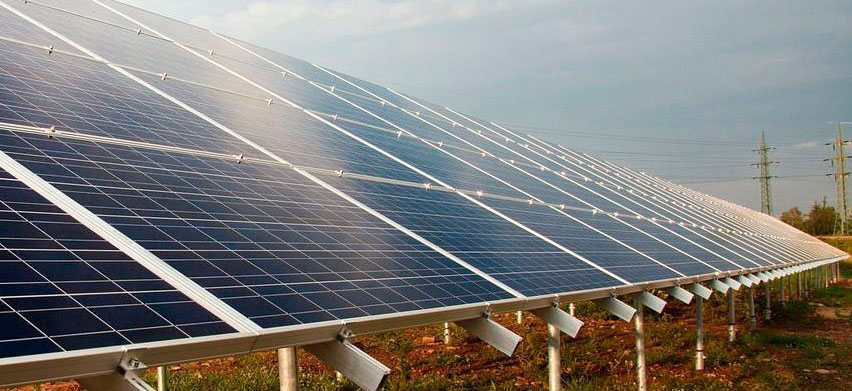
When the Agua Cliente solar plant west of Phoenix, Arizona was commissioned in 2014 it was the largest in world. But the new leader at Bhadla, India is ten times larger, and it will soon be eclipsed by another plant in Dholera which will be more than twice as large as that. These are just two of the fifty “Ultra Mega Solar Plants” being built in India, part of a new goal for the nation to more than triple electricity produced from renewable sources by 2030. India has sworn to reduce greenhouse gas emissions by more than one-third in the next few years and to achieve net-zero emissions by 2070.
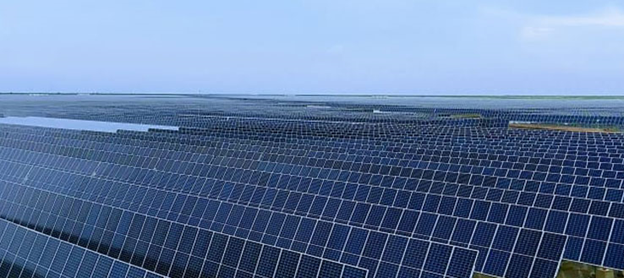
(Courtesy of Tata Power Solar)
This is a stunning change in government policy. Just recently India was the most aggressive country in its plans to burn more coal. These plans were so large and ambitious that even if all other countries in the world had immediately stopped producing greenhouse gases, India’s emissions alone would have pushed the climate beyond dangerous thresholds. Even so, the government claimed it had not only a right but a moral obligation to bring power to the hundreds of millions of its citizens living in the most appalling poverty. Burning coal was the cheapest way to accomplish this.
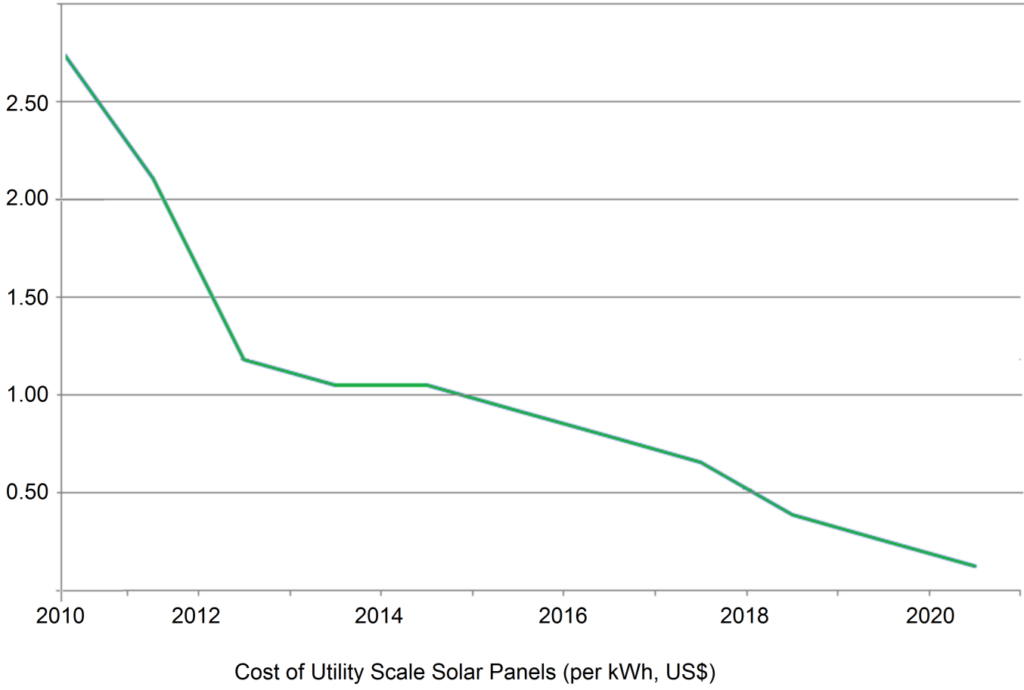
But the price of solar power fell more than 80% between 2010 and 2020, well below the cost of energy from coal. Now India has embraced renewable energy and especially solar power as its future. As a result, of the 16 Ultra Mega Coal Power Plants that were planned a few years ago, only two have become operational, two more are on hold, and the remaining twelve have been cancelled. In contrast, at least 34 of the 50 planned Ultra Mega Solar Plants have already been completed or have begun construction. But it isn’t only economics that led India to change its plans.
Killing with Kindness
For India’s poor, coal-fired electricity is no blessing. An article in the prestigious British medical journal Lancet estimates close to two million Indians die annually from air pollution. According to United States-based research group Energy Policy Institute at the University of Chicago (EPIC), air pollution can reduce the life expectancy of Indians by nine years. Death and illness due to mercury poisoning from coal mining are already common in rural villages, along with black lung and toxic drinking water. And on average, coal mine accidents claim an Indian life every week.
The problems facing India are shared by most of the developing world—the deep poverty that underlies the hopelessness and hostility in many resource-poor regions. But the opportunities offered by renewable power are also shared. It is true everywhere that the most suitable locations for renewable power are usually in regions where the land is agriculturally poor. Even in fertile Indian farming regions such as the Punjab, 15% of the land is unsuitable for agriculture—yet ideal for solar panels. So renewable power will improve living standards not only by providing electricity but also by creating good jobs in the areas most desperately in need of them.
Power Struggle
Solar power in India is now the cheapest in the world. Installing a new industrial solar panel in India costs about one third of the same installation in the US. Because of its tropical location, a panel in India will produce about three times as much energy per day as it would in northern Europe. From start to finish it usually takes 10 years for a new coal-fired plant to come online, while solar power projects can typically be completed in no more than a year and a half. India’s Central Electricity Authority now says that the country does not need any new coal-fired plants beyond those already under construction.
In general the industrialized world has been increasing energy efficiency and reducing emissions while developing countries have been moving in the opposite direction, usually by burning more coal. Burning coal still provides the greatest share of power in India. About 75% of India’s electricity comes from coal, consuming about 13% of the world’s coal production, second only to China. Although India is the second largest coal mining nation, it must still import coal. Since the beginning of this century India has more than doubled its greenhouse gas emissions.
India’s emissions are only 18% of the US total.
However, many in India believe that wealthy nations caused the climate crisis and are therefore responsible for fixing it. Per-capita, India ranks 23rd in the world in coal consumption, after Indonesia. And India’s greenhouse gas emissions tell a similar story. India accounts for 8% of the world’s total emissions and is the third largest emitter—but its emissions per person are far below the world average. The industrial world became rich burning coal and is now telling India and other developing economies that they cannot do the same. But hurricanes, floods, drought and wildfires do not care who’s responsible for warming the Earth, in India or anywhere else.
What Is There to Lose?
Having tripled its solar power in the last five years, India plans to more than double solar capacity again by 2025.
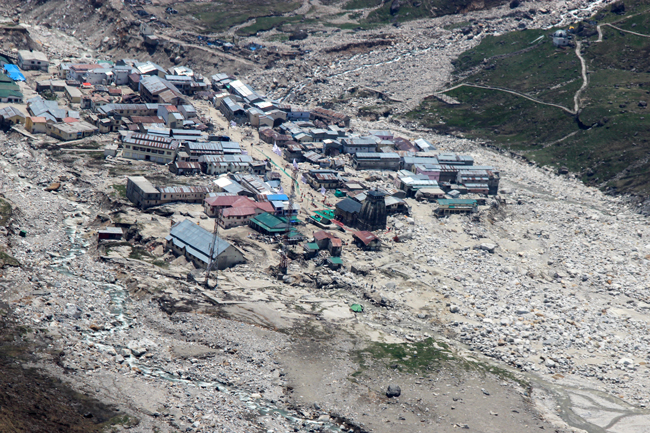
India is at great risk from climate change. The monsoon rains that are critical for farming have become erratic, with violent downpours in some regions while others bake in drought. Millions of people starved to death when the monsoons failed many years ago. Since then, agricultural improvements have blunted the effects of crop failures. But there are limits to how much crop failure can be endured. India and its south Asian neighbors, in total one quarter of the world’s population, face competition for dwindling resources in this region where nations with nuclear weapons simmer in naked hostility.
Like China, India has found that cheap energy is the key to alleviating poverty but also that cheap energy from coal comes at a high cost to health and nature. Now India has discovered opportunity in the crisis. Having tripled its solar power in the last five years, India plans to more than double solar capacity again by the end of 2025. India’s rapid growth in both its economy and its solar power is a model for how developing economies can decarbonize while still meeting their economic goals. And India will do this using the sunlight that falls within its own borders.

Buckley, Tim. “Cancellation of 4 Ultra Mega Power Plants Underscores India’s Commitment to Transition.” Institute for Energy Economics and Financial Analysis, June 19, 2016.
Chaganti Singh, Sarita, and Sudarshan Varadhan. “India amends power policy draft to halt new coal-fired capacity.” Reuters, May 5, 2023.
Editorial staff. “Air pollution may reduce life expectancy of Indians by nine years, says study.” BBC News, September 1, 2021.
Editorial staff. “COP26: India PM Narendra Modi pledges net zero by 2070.” BBC News, November 2, 2021.
Editorial staff. “Lancet study: Pollution killed 2.3 million Indians in 2019.” BBC News, May 18, 2022.
Ellis-Petersen, Hannah. “Narendra Modi pledges India will reach net zero emissions by 2070.” The Guardian, November 1, 2021.
Fuller, Richard, Philip J. Landrigan, Kalpana Balakrishnan, Glynda Bathan, Stephan Bose-O’Reilly, Michael Brauer, Jack Caravanos, et al. “Pollution and Health: A Progress Update.” The Lancet Planetary Health 6, no. 6 (June 2022): e535–47. https://doi.org/10.1016/s2542-5196(22)00090-0.
International Energy Agency. “India: Countries and Regions.” IEA. Accessed Jun 25, 2025.
International Renewable Energy Agency. Renewable Power Generation Costs in 2020. IRENA, 2021. Available online at https://www.irena.org/publications/2021/Jun/Renewable-Power-Costs-in-2020/
Jowit, Juliette. “India could push world into climate change danger zone, warn scientists.” The Guardian, November 11, 2025.
Narayan, Mohi. “Pollution likely to cut 9 years of life expectancy of 40% of Indians.” Reuters, September 1, 2021.
Our World in Data. “Data Page: Coal consumption per capita.” Part of: Hannah Ritchie, Pablo Rosado, and Max Roser – “Energy.” Data adapted from Energy Institute, various sources, 2023. Retrieved from https://archive.ourworldindata.org/20250624-125417/grapher/coal-consumption-per-capita.html
Robertson, Joe. “The 20 Largest Solar Power Plants in the World.” Solar Power Guide, using data from Wikipedia. Accessed June 25, 2025.
Rose, David. “Why India is captured by carbon.” The Guardian, May 27, 2015.