Mesopotamia:
Ancient Mesopotamian Literature and Sacred Texts
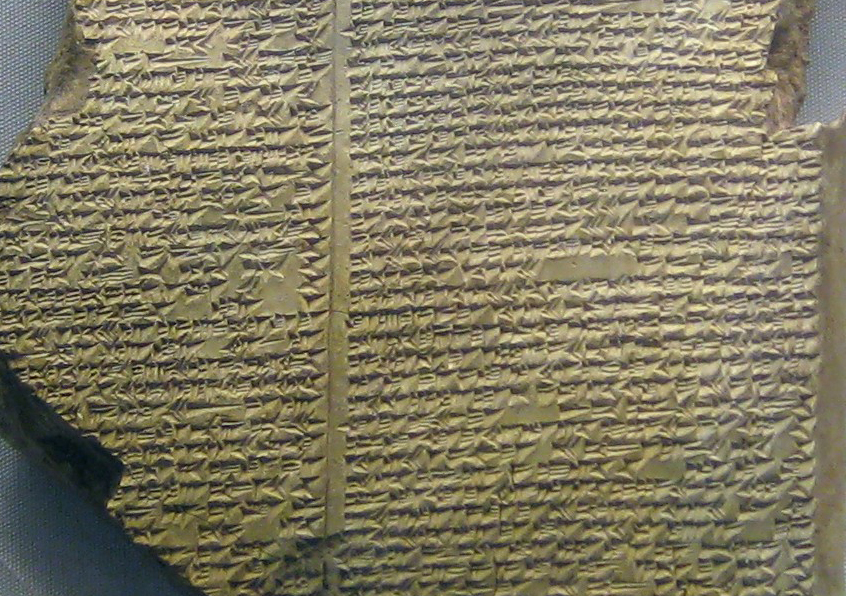
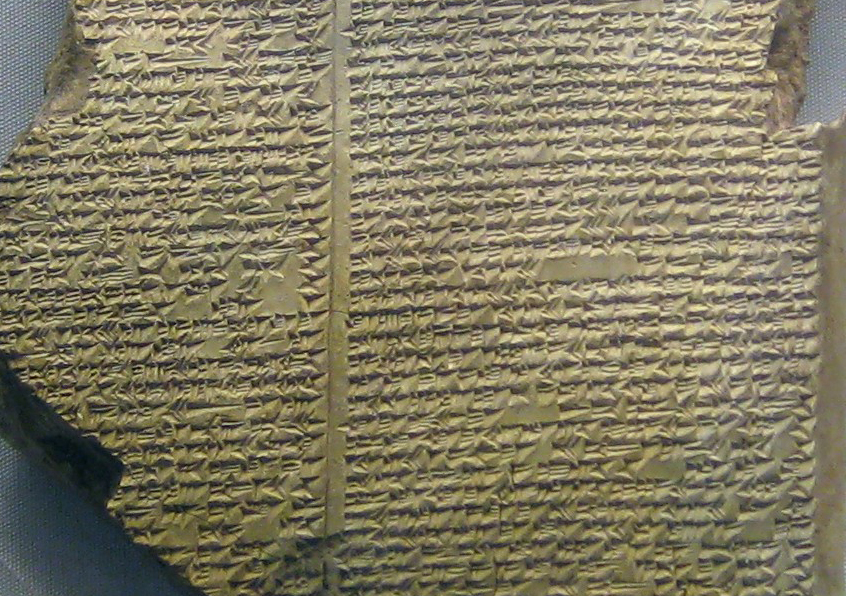
Portion of The Flood Tale from the Epic of Gilgamesh. Harvard Semitic Museum. Wikimedia Commons.
In 669 BCE, Ashurbanipal became ruler of the Assyrian Empire. During his reign he added more Mesopotamian literature to the library at Nineveh than any of his ancestors had done over the previous two centuries. Much of our knowledge of ancient Babylonian myths and early history comes from his effort. Fragments discovered at the site confirm that Assyrian scribes were tasked to copy Babylonian original tablets inscribed as early as 1,500 years before the first wave of Jews became captive in Babylon. Among these copies were found ancient Babylonian accounts of the creation of the world.
Assyrian scribes were tasked to copy Babylonian original tablets inscribed as early as 1,500 years before the first wave of Jews became captive in Babylon.
George Smith, the original discoverer in 1876 and translator of the Babylonian epic Enûma Eliš, regarded the events of creation in the Enûma Eliš as being directly comparable to that of Genesis. In 1942, another scholar, Alexander Heidel, insisted that the biblical Genesis account was unique. Today most scholars agree that although there are significant differences, there are enough similarities in these accounts to indicate that the creation story in the biblical Genesis draws upon a common cultural legacy.
Fragments found at the site indicate that the library comprised of some 10,000 or more inscribed tablets treating almost every branch of knowledge in existence at the time. The Babylonian Izdubar (a literal translation of the ideograph for “Gilgamesh”) legends, Assyrian copies of which were also found on 12 tablets at Nineveh, include the story of the Flood. The story of the Tower of Babel was also found on tablets there, as was the story of the destruction of Sodom and Gomorrah. These were all originally written down at least as early as 2,000 BCE from an oral tradition that was very much older. These Babylonian stories include:
- The Enûma Eliš: Tablets have been found dating from the 7th century BCE, but the story is generally thought to have an earlier origin dating as far back as the 18th to 16th centuries BCE.
- Atrahasis Epic: ca 1640 BCE.
- Epic of Gilgamesh: Sumerian version, 2150–2000 BCE. The most complete Akkadian version, 1300–1000 BCE.
- Saga of “Izdubar” (Gilgamesh)
- Adapa and the South Wind: Likely earliest known: 14th century BCE.
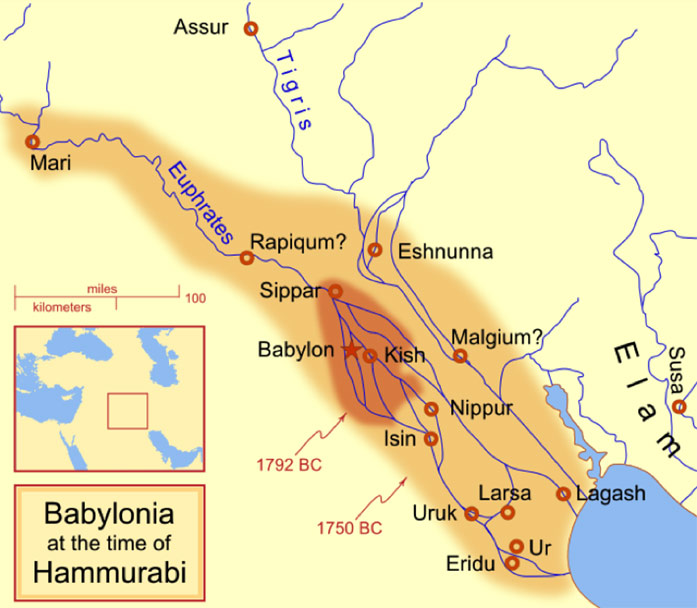
The high point of Babylonian civilization was the rule of Hammurabi (around 1700 BCE). From his reign, we have the first written record of a legal code, which most likely was established through oral tradition long before: the Law Code of Hammurabi, written more than a thousand years before the Israelites, while exiled in Babylon, wrote down their Ten Commandments.

Gateways to Babylon. “Atrahasis – Tablet I.” Accessed October 10, 2024. https://www.gatewaystobabylon.com/myths/texts/enki/atraha1.htm
Heidel, Alexander. The Babylonian Genesis: The Story of the Creation. University of Chicago Press, 1942.
Hurowitz, Victor. “The Genesis of Genesis: Is the Creation Story Babylonian?” Bible Review, Biblical Archaeology Society, Anniversary Issue 2005, Volume 21 Number 1.
Smith, George. The Chaldean Account of Genesis: Containing the Description of the Creation, the Fall of Man, the Deluge, the Tower of Babel, the Times of the Patriarchs, and Nimrod; Babylonian Fables, and Legends of the Gods; from the Cuneiform Inscriptions. Fifth edition. S. Low, Marston, Searle, and Rivington, 1876.
The ETCSL Project, Faculty of Oriental Studies, University of Oxford. “The Electronic Text Corpus of Sumerian Literature.” Accessed October 10, 2024. https://etcsl.orinst.ox.ac.uk/cgi-bin/etcsl.cgi?text=c.1.8.1*#
The Internet Sacred Text Archive. “Enuma Elish: The Epic of Creation.” Accessed October 10, 2024. https://sacred-texts.com/ane/enuma.htm
The Internet Sacred Text Archive. “Adapa and the Food of Life.” Accessed October 10, 2024. https://sacred-texts.com/ane/adapa.htm
The Internet Sacred Text Archive. “Ishtar and Izdubar.” Accessed October 10, 2024. https://sacred-texts.com/ane/iai/